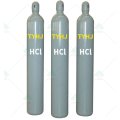
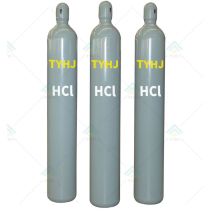
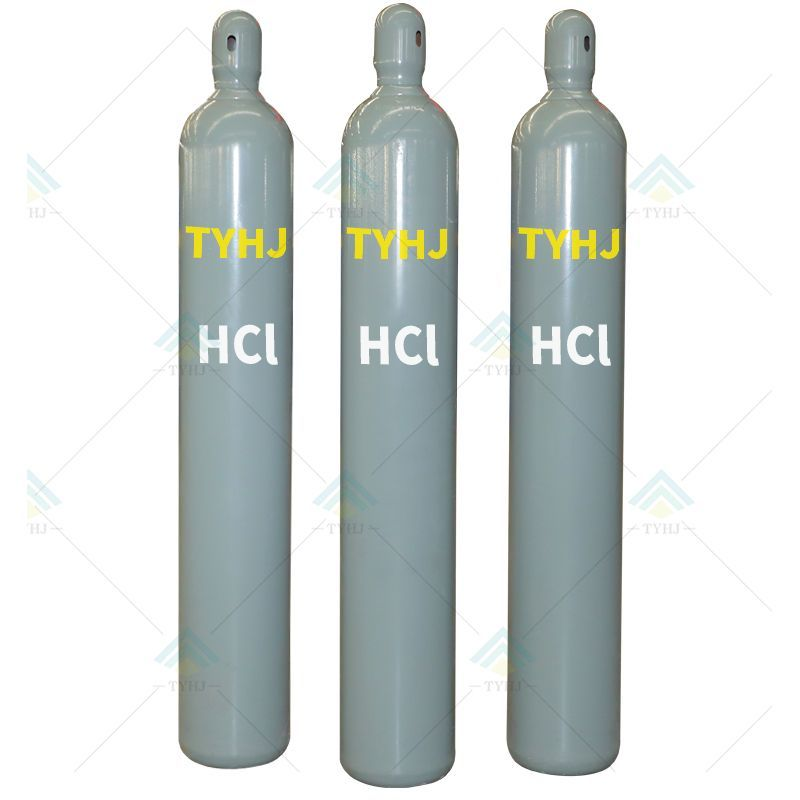
Hydrogen chloride (HCl) specialty gas is widely used in environmental monitoring, semiconductor processing, laboratory analysis, instrument calibration and industrial research. However, because HCl is toxic, highly corrosive in the presence of moisture and commonly supplied as a compressed gas or specialty gas mixture, proper cylinder storage is essential.
Safe HCl specialty gas storage requires more than simply placing cylinders in a warehouse. Users need to consider ventilation, cylinder restraint, moisture control, compatible materials, leak monitoring, segregation and emergency planning.
This guide explains the key precautions laboratories, industrial facilities and specialty gas users should consider when storing hydrogen chloride gas.
Important: Storage and handling requirements depend on HCl concentration, cylinder type, gas matrix, quantity and local regulations. Always follow the SDS supplied with the specific gas cylinder and your facility's EHS procedures.
Hydrogen chloride is a colorless to slightly yellow gas with a strong irritating odor. NIOSH notes that anhydrous hydrogen chloride is shipped as a liquefied compressed gas. Both OSHA and NIOSH list a ceiling exposure limit of 5 ppm, while NIOSH identifies 50 ppm as immediately dangerous to life or health (IDLH).
The main hazards are different from those associated with ordinary inert calibration gases.
HCl strongly irritates the respiratory tract. Significant exposure can cause serious respiratory injury, making leak prevention and ventilation critical.
Hydrogen chloride reacts readily with water to form hydrochloric acid.
Even atmospheric moisture can therefore create a highly corrosive environment around leaking HCl.
A hydrogen chloride SDS from Linde notes that HCl reacts with water to form corrosive acids and may react with metals in the presence of moisture, potentially releasing flammable hydrogen.
HCl specialty gas may be stored under pressure. Cylinder damage, excessive heating or incorrect valve handling can therefore create additional mechanical hazards.
Hydrogen chloride gas is heavier than air. A leak may accumulate in confined or low-lying areas rather than immediately dispersing.
For this reason, storage design should address both chemical toxicity and compressed-gas safety.
Adequate ventilation is one of the most important requirements for hydrogen chloride gas storage.
Gas cylinders should be kept in a location designed to prevent dangerous accumulation if a leak occurs.
Depending on gas concentration, cylinder quantity and applicable local codes, this may involve:
A dedicated specialty gas storage room
A ventilated gas cabinet
A monitored cylinder enclosure
A properly designed outdoor gas storage area
Commercial HCl specialty gas suppliers also specify that cylinders should be stored and used in an upright, secured position in a well-ventilated or monitored area.
Because HCl is heavier than air, ventilation and gas-detection systems should be engineered with possible low-level accumulation in mind rather than assuming leaked gas will rise.
The appropriate ventilation rate and detector location should be determined by qualified EHS or facility engineers according to the installation.
HCl cylinders should never be left standing unsecured.
OSHA guidance for compressed gases recommends storing cylinders upright and securing them against movement or falling.
Suitable securing methods may include approved:
Cylinder chains
Straps
Racks
Cylinder stands
Gas cabinets
This protects the valve from mechanical damage and reduces the chance of a cylinder falling during storage or handling.
Full, partially used and empty cylinders should all remain properly secured.
An "empty" HCl specialty gas cylinder can still contain residual pressure and hazardous gas.
Compressed gas cylinders should not be exposed to excessive temperature.
Linde's hydrogen chloride SDS advises keeping containers below 50°C (122°F) and storing them away from heat and fire risk.
In practice, HCl specialty gas cylinders should not be stored:
Beside furnaces
Near steam lines
Against heating equipment
In uncontrolled high-temperature areas
In direct intense heat exposure
Where a fire could directly involve the cylinder
Never attempt to heat a cylinder with a flame or electrical heating device to increase gas pressure.
If temperature or delivery pressure is a concern, consult the specialty gas supplier rather than improvising a heating method.
Moisture control is particularly important for HCl.
Hydrogen chloride reacts strongly with water. Moisture entering valves, regulators or gas delivery components can produce hydrochloric acid and dramatically increase corrosion.
Therefore, HCl gas systems should be protected from:
Rain
Condensation
Water spray
High-moisture contamination
Wet regulators
Wet piping
Water backflow into the cylinder
A dry environment helps protect both personnel and gas-handling equipment.
It is also important for specialty gas quality.
For low-concentration HCl calibration gas, contamination or surface reactions within the gas delivery system can affect the concentration reaching an analyzer.
Do not assume that a regulator suitable for nitrogen, argon or ordinary compressed air is automatically suitable for HCl.
Hydrogen chloride is a reactive and corrosive specialty gas, particularly when moisture is present.
The cylinder should only be connected to regulators, valves, piping and tubing specified for the actual HCl mixture, pressure and operating conditions.
Linde specifically advises users to employ properly specified equipment suitable for the product, pressure and temperature and to contact the gas supplier if compatibility is uncertain.
Important components include:
| Component | Storage/Handling Consideration |
|---|---|
| Cylinder valve | Must remain clean, protected and undamaged |
| Pressure regulator | Must be designed for HCl service |
| Tubing | Material must be compatible with the gas and required purity |
| Fittings | Must match the specified cylinder connection |
| Seals | Must tolerate the specific gas and operating conditions |
| Gas cabinet | May be required depending on quantity and local code |
| Gas detector | Should be suitable for hydrogen chloride detection |
Never force incompatible cylinder fittings together or use adapters simply to bypass the intended gas connection.
Correct cylinder connections help prevent accidental connection of incompatible gases or equipment.
Backflow into an HCl cylinder can create serious safety and product-quality problems.
Water, acids, alkalis or process gases should never be allowed to enter the cylinder.
Supplier safety guidance specifically warns against water, acid or alkali suck-back and against back-feeding material into the container.
A properly engineered specialty gas delivery system may therefore include appropriate isolation, check valves or purge arrangements designed by qualified personnel.
This is especially important in:
Analytical laboratories
Semiconductor gas systems
Emission monitoring systems
Chemical processing
Gas blending
Research installations
Users should never improvise backflow-prevention arrangements without confirming suitability for HCl service.
Contamination around an HCl cylinder outlet can create both safety and analytical problems.
Valve outlets should be kept free from:
Water
Oil
Dirt
Process chemicals
Cleaning residues
Atmospheric contamination where practical
Supplier instructions emphasize keeping cylinder valve outlets clean, particularly from water and oil.
After the cylinder is disconnected, replace the appropriate outlet plug, valve guard or protective cap where provided.
The main cylinder valve should remain closed when the gas is not in use, including when the cylinder is empty.
Users should not attempt to refill or transfer HCl from one cylinder into another.
Cylinder filling requires specialist equipment, pressure-control systems, gas-compatible materials, analytical procedures and trained personnel.
Supplier safety guidance explicitly advises users not to transfer gases from one cylinder or container into another.
If a cylinder is damaged, contaminated or no longer suitable for use, isolate it according to the site's emergency procedure and contact the gas supplier.
Do not attempt to repair:
Cylinder valves
Pressure-relief devices
Valve threads
Cylinder bodies
Cylinder repairs should only be performed by authorized professionals.
Hydrogen chloride should not simply be stored among every other chemical or gas cylinder.
Particular attention should be given to materials that may react with HCl.
For example, anhydrous HCl can react strongly with bases, and moisture can greatly accelerate corrosion of metals.
Storage planning should therefore consider segregation from incompatible:
Alkalis
Reactive chemicals
Moisture sources
Materials susceptible to severe HCl corrosion
The exact segregation distances and cabinet requirements depend on the quantity stored, concentration and applicable local fire/building code.
Use the specific SDS and local regulations rather than relying on a universal separation distance.
Odor should never be treated as the primary method of detecting an HCl leak.
Facilities handling significant quantities or higher-concentration hydrogen chloride should consider fixed toxic-gas monitoring as part of the overall engineering controls.
An appropriate detection system may be designed to:
Detect HCl releases
Trigger audible and visual alarms
Notify facility personnel
Interface with ventilation systems
Support emergency shutdown procedures
Detector range and placement should be determined by qualified personnel based on:
Cylinder quantity
Gas concentration
Room geometry
Ventilation
Potential leak locations
Applicable fire and safety codes
Gas detectors should also be routinely maintained and calibrated according to the detector manufacturer's instructions.
A simple inspection checklist can help facilities identify common storage problems.
| Check Item | Recommended Condition |
|---|---|
| Cylinder position | Upright |
| Cylinder restraint | Properly secured |
| Ventilation | Adequate and operational |
| Cylinder temperature | Protected from excessive heat |
| Storage environment | Dry and protected from corrosion |
| Valve protection | Cap/guard installed when appropriate |
| Cylinder label | Clearly identifiable |
| Regulator | Approved for HCl service |
| Cylinder condition | No visible damage or severe corrosion |
| Gas detection | Operational where required |
| Incompatible materials | Properly segregated |
| SDS | Available to personnel |
| Emergency procedure | Established and accessible |
Periodic inspections are particularly important because even minor corrosion, damaged fittings or incorrect storage practices can develop into serious incidents.
Yes.
There is an important difference between anhydrous or high-concentration hydrogen chloride and a low-ppm HCl specialty gas mixture.
For example, commercially available calibration standards may contain concentrations such as HCl in nitrogen rather than pure hydrogen chloride. Airgas currently lists multiple certified HCl/N₂ reference mixtures intended for analytical applications.
The hazards of the complete mixture depend on:
HCl concentration
Balance gas
Cylinder pressure
Total gas quantity
Cylinder type
Therefore, users should never apply the SDS for pure anhydrous HCl to every HCl calibration mixture—or assume that a diluted calibration mixture is harmless.
Always use the SDS corresponding to the exact cylinder composition.
These terms are sometimes confused.
Hydrogen chloride gas (HCl) and hydrochloric acid solution are not stored in the same way.
Hydrogen chloride becomes hydrochloric acid when dissolved in water.
OSHA distinguishes anhydrous hydrogen chloride from aqueous hydrochloric acid for regulatory purposes and confirms that anhydrous hydrochloric acid and hydrogen chloride refer to the same water-free substance.
| Product | Typical Form |
|---|---|
| Hydrogen chloride / anhydrous HCl | Gas or liquefied compressed gas |
| HCl specialty gas mixture | HCl diluted in a balance gas such as nitrogen |
| Hydrochloric acid | HCl dissolved in water |
The storage equipment and risk assessment therefore need to match the actual product.
A suspected HCl leak should be treated as an emergency rather than a routine maintenance issue.
Personnel who are not specifically trained and equipped for HCl emergency response should:
Leave the affected area.
Prevent others from entering.
Activate the site's emergency response procedure.
Contact trained emergency/EHS personnel and the gas supplier.
Do not approach or attempt to repair the leaking cylinder.
NIOSH identifies 50 ppm hydrogen chloride as IDLH, illustrating why uncontrolled releases can become dangerous very quickly.
Emergency response involving a significant HCl release may require supplied-air or self-contained respiratory protection and chemically resistant protective equipment; such response should only be performed by properly trained personnel under an established emergency plan.
Storage safety begins before the cylinder reaches the storage location.
Compressed gas cylinders should not be:
Dropped
Dragged
Rolled horizontally as a transportation method
Struck against other cylinders
Lifted by the valve or valve protection cap
OSHA recommends moving compressed gas cylinders with protective caps in place and using proper cylinder-handling practices.
Use an appropriate cylinder cart when moving larger cylinders.
For laboratories, storage affects more than safety.
HCl is a reactive gas, so the cylinder preparation, internal surface treatment, mixture concentration and gas-delivery system can influence long-term mixture stability.
This becomes especially important for low-concentration HCl calibration gas, where small losses through adsorption or reaction can create meaningful analytical errors.
When purchasing HCl specialty gas, laboratories should therefore confirm:
Certified HCl concentration
Balance gas
Analytical uncertainty
Mixture stability
Shelf life
Cylinder material
Cylinder surface treatment where applicable
Valve specification
Recommended regulator
Storage requirements
Certificate of analysis
Applicable traceability
The cheapest cylinder is not necessarily the most economical option if concentration instability or incompatible equipment produces inaccurate analytical results.
A falling cylinder can damage the valve and create a serious release hazard.
Better practice: Secure every cylinder, including cylinders considered empty.
Some regulators designed for inert gases may not be suitable for corrosive HCl service.
Better practice: Verify regulator and wetted-material compatibility with the specialty gas supplier.
Moisture significantly increases HCl corrosion risk.
Better practice: Maintain a dry, controlled storage environment.
By the time personnel notice an irritating odor, exposure may already have occurred.
Better practice: Use engineering controls and appropriate monitoring based on the facility risk assessment.
Corrosion, valve damage or an abnormal cylinder condition should never be ignored.
Better practice: Stop using the cylinder and contact the supplier.
Residual hazardous gas and pressure may remain.
Better practice: Keep valves closed, maintain identification and handle empty cylinders using the same basic storage precautions.
Safe storage begins with correct product specification.
When sourcing HCl specialty gas, industrial buyers should ask the supplier about:
Confirm whether the requirement is:
Pure/anhydrous hydrogen chloride
HCl in nitrogen
HCl in air
HCl in another compatible gas matrix
Specify the required concentration and intended application.
Low-ppm calibration gases and high-concentration process gases require very different risk-management approaches.
The supplier should recommend a cylinder package and valve connection appropriate for the gas concentration and destination market.
For analytical standards, confirm certified shelf life and mixture stability.
Ask about suitable regulators, valves and delivery components.
For laboratory or industrial applications, buyers may require:
Certificate of analysis
SDS
Concentration uncertainty
Traceability information
Cylinder identification
Expiration or certification period
Providing the intended application helps the specialty gas manufacturer recommend a safer and more suitable gas package.
Proper HCl specialty gas storage requires a combination of compressed-gas safety and corrosive-gas management.
The most important principles are straightforward:
Store cylinders upright and securely restrained.
Maintain effective ventilation.
Keep cylinders away from excessive heat.
Prevent moisture contamination.
Use HCl-compatible gas delivery equipment.
Keep valves clean and protected.
Prevent backflow.
Separate incompatible chemicals.
Use appropriate gas monitoring where required.
Never repair, refill or transfer HCl cylinders yourself.
Follow the SDS supplied with the exact gas mixture.
For low-concentration HCl calibration mixtures, storage practices also help preserve gas stability and measurement accuracy.
Whether HCl is used for semiconductor processing, environmental monitoring, analytical calibration or industrial research, safe storage is part of maintaining both personnel safety and specialty gas performance.
Hydrogen chloride itself is classified as nonflammable. However, it can react with some metals in the presence of moisture and release hydrogen, which is highly flammable.
Yes. Compressed gas cylinders should generally be stored upright and securely restrained to prevent falling.
Outdoor storage may be possible when the installation complies with the product SDS and applicable local regulations and protects cylinders from heat, moisture, corrosion, physical damage and unauthorized access. The exact requirements depend on cylinder quantity and concentration.
HCl reacts strongly with water to produce hydrochloric acid. Moisture can therefore increase corrosion of gas-handling components and create additional chemical hazards.
Do not assume so. The regulator and all wetted components should be confirmed as compatible with the exact HCl concentration, balance gas, pressure and application.
Keep the valve closed, retain the cylinder identification, replace protective caps or outlet plugs where provided, secure the cylinder upright and return or dispose of it according to the supplier's instructions.
OSHA and NIOSH list a ceiling exposure limit of 5 ppm, while NIOSH lists 50 ppm as IDLH. These occupational exposure values are not storage targets; properly designed storage should prevent routine personnel exposure.

Search News