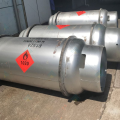
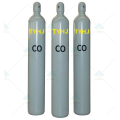
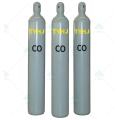
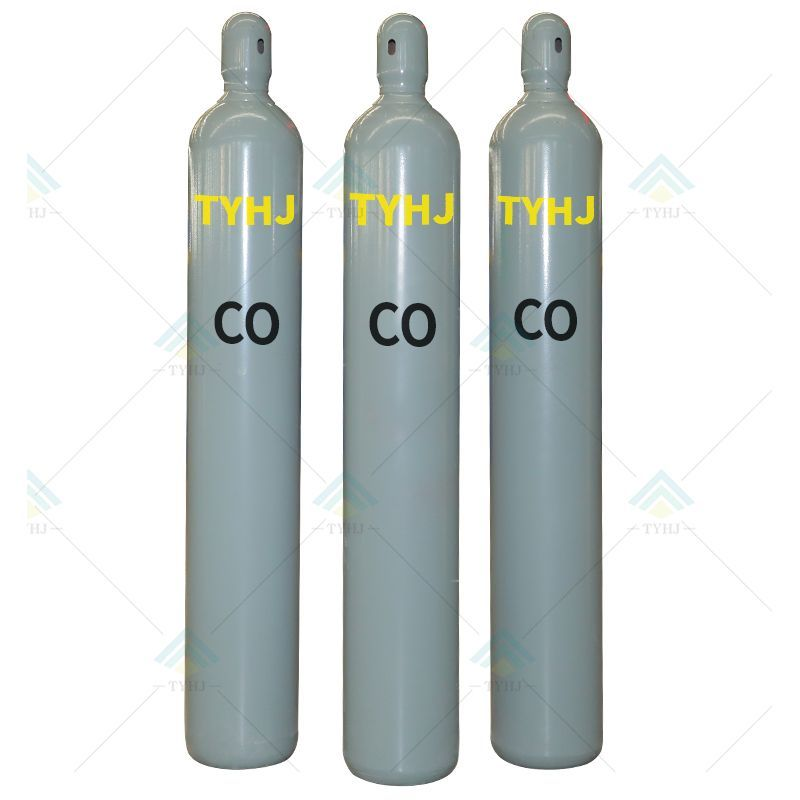
In medical device manufacturing, measurement accuracy is not simply a performance target—it can directly affect device validation, quality control, and the reliability of measurements made in clinical environments. For manufacturers producing gas analyzers, respiratory monitoring equipment, breath analyzers, carbon monoxide detectors, and other gas-sensitive devices, CO specialty gas plays an important role in calibration, verification, sensor testing, and product development.
Carbon monoxide specialty gases are typically supplied either as high-purity CO or, more commonly for calibration work, as precisely prepared mixtures containing a known concentration of CO in a balance gas such as air or nitrogen. Commercial CO mixtures can cover concentrations from very low ppm levels upward, allowing manufacturers to select standards appropriate for different sensor ranges and testing requirements.
This article explains where CO specialty gases are used in medical device manufacturing, what specifications manufacturers should consider, and why gas quality and traceability matter when selecting a supplier.
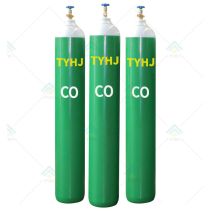
CO specialty gas refers to carbon monoxide supplied at controlled purity or at a precisely defined concentration within another gas.
Depending on the application, manufacturers may use:
High-purity carbon monoxide
CO in synthetic air
CO in nitrogen
Low-ppm CO calibration mixtures
Multi-component calibration mixtures containing CO
Custom CO concentrations for specific instruments
The most important difference between ordinary industrial gas and specialty gas is usually the level of control over composition, impurities, analytical accuracy, certification, and traceability.
For medical device manufacturers, the concentration written on a cylinder cannot simply be an approximate value. When the gas is used to establish or verify an instrument's response, uncertainty in the reference gas can become part of the overall measurement uncertainty of the device.
For this reason, calibration and testing laboratories frequently require gases accompanied by appropriate analytical documentation. ISO/IEC 17025, for example, provides a framework for laboratories performing testing and calibration to demonstrate technical competence and reliable results.
Medical devices that detect or quantify gases must distinguish between different concentration levels consistently.
A CO sensor may need to answer questions such as:
Does the device respond when CO is introduced?
Is the displayed concentration accurate?
Is sensor response linear across the specified range?
Does the alarm activate at the intended concentration?
Does the sensor remain accurate after aging or environmental exposure?
Is performance consistent from one production batch to another?
A known CO reference mixture provides manufacturers with a controlled input against which the device output can be evaluated.
The principle is straightforward:
Known gas concentration → device measurement → comparison → calibration or verification
Calibration against known gas standards is also a recognized practice for gas-monitoring equipment. OSHA guidance, for example, specifies calibration using appropriate span gases according to instrument instructions.
One of the clearest medical applications for CO calibration gas is the manufacture and maintenance of breath carbon monoxide analyzers.
These devices measure CO concentrations in exhaled breath and may be used in applications such as:
Smoking cessation programs
Carbon monoxide exposure assessment
Emergency medical evaluation
Respiratory health screening
Clinical research
Commercial medical breath analyzers specifically designed to measure exhaled CO are already widely available. Bedfont, for example, manufactures breath CO devices for smoking cessation and carbon-monoxide-related assessment.
During production, a precisely prepared CO mixture can be introduced into the sensing system to determine whether the instrument produces the expected reading.
A manufacturer may perform:
Zero testing
The device is exposed to zero gas or appropriate clean reference gas to establish the baseline.
Span calibration
A known CO concentration is introduced so that the sensor response can be adjusted or verified.
Accuracy testing
The measured value is compared with the certified concentration.
Repeatability testing
The same gas concentration is applied repeatedly to determine whether the instrument produces consistent results.
Multi-point testing
Several concentrations may be used to evaluate performance across the measuring range.
Real-world medical devices illustrate why accurate reference concentrations matter. Bedfont specifies 50 ppm CO in air for calibration of its ToxCO device.
This type of application makes CO calibration gas for medical breath analyzers an important specialty-gas requirement for manufacturers, service laboratories, and device distributors.
Many medical and healthcare-related instruments incorporate electrochemical or other gas-sensing technologies.
During production, manufacturers may need to calibrate individual sensors before they are installed into the finished product or verify the completed instrument at end-of-line testing.
Carbon monoxide detectors measure CO concentration in parts per million, making controlled reference concentrations essential when manufacturers need to characterize sensor performance.
Typical production testing may evaluate:
| Test | Purpose |
|---|---|
| Zero response | Confirm baseline stability |
| Span response | Verify response to known CO |
| Sensitivity | Determine sensor response per concentration |
| Repeatability | Check measurement consistency |
| Linearity | Verify response across multiple CO levels |
| Alarm function | Confirm alarm behavior |
| Recovery | Measure return toward baseline |
| Cross-sensitivity | Evaluate interference from other gases |
For high-volume medical device manufacturing, reliable calibration gas can therefore contribute to both product quality and production consistency.
Calibration during sensor assembly is only one step.
Before a finished medical gas detection or breath-analysis device leaves the factory, manufacturers may conduct final quality-control tests using certified or carefully controlled gas standards.
The purpose is to confirm that the complete device—including the sensor, electronics, software, flow path, pump, filters, alarms, and display—functions correctly as one system.
A typical final QC sequence may include:
Step 1: Introduce a known CO concentration.
Step 2: Allow the instrument to stabilize according to its test protocol.
Step 3: Compare the device reading against the reference concentration.
Step 4: Confirm that the result falls within the manufacturer's allowable tolerance.
Step 5: Record the result in the production or quality system.
This creates a traceable link between the reference gas used during testing and the device released to the customer.
For regulated products, that documentation can become an important part of manufacturing quality records.
Before a medical device reaches mass production, engineers must understand how its sensing system behaves under different conditions.
CO specialty gases are therefore valuable during R&D and prototype development.
Engineers can use controlled gas mixtures to study:
Sensor sensitivity
Response time
Recovery time
Detection limits
Measurement range
Long-term stability
Temperature effects
Humidity effects
Sensor drift
Cross-sensitivity
Calibration algorithms
For example, a development team designing a portable CO breath analyzer might expose prototype sensors to several controlled CO concentrations and compare sensor signals against the known reference values.
The resulting data can help engineers develop the mathematical relationship between:
Sensor signal → actual CO concentration
That relationship can later become part of the device firmware or calibration model.
Another important application involves devices designed to help identify carbon monoxide exposure.
Medical technologies may assess CO exposure through different mechanisms. Some systems directly analyze CO in exhaled breath, while other devices estimate carboxyhemoglobin using optical measurements rather than directly measuring gaseous CO. For example, Masimo's Pulse CO-Oximetry technology measures carboxyhemoglobin noninvasively in blood.
For devices that directly measure gaseous CO, controlled CO mixtures can support:
Prototype characterization
Production calibration
Accuracy verification
Alarm testing
Service calibration
Periodic performance checks
It is important for manufacturers to distinguish between devices requiring a physical CO reference gas and technologies whose measurement principle requires other validation methods.
Hospitals and healthcare facilities rely on medical gas pipeline systems carrying gases such as oxygen and medical air.
Monitoring equipment may be used to detect contaminants and verify gas quality within these systems. Some medical pipeline monitoring solutions include carbon monoxide measurement because CO can represent an undesirable contaminant.
Bedfont, for example, provides medical pipeline monitoring equipment intended to verify piped medical gas quantity and quality, including equipment capable of monitoring harmful gases.
Manufacturers of such analyzers may therefore use CO specialty gas when developing and testing:
Medical air quality monitors
Pipeline verification instruments
Portable medical gas analyzers
Contaminant detection systems
Alarm systems
Calibration gases enable the manufacturer to confirm that the monitoring system recognizes known CO concentrations accurately.
Some instruments are designed not only to display CO concentration but also to activate warnings when defined conditions are reached.
Manufacturers therefore need to verify the complete alarm chain.
Testing may involve checking:
Sensor response
Electronic signal processing
Software thresholds
Visual alarms
Audible alarms
Remote outputs
Data logging
Communication with monitoring systems
A known CO concentration gives engineers a repeatable test condition.
Rather than relying on uncontrolled environmental exposure, a specialty gas standard creates a predictable challenge for the device.
This is particularly valuable for automated production testing where every device needs to be evaluated under equivalent conditions.
A sensor may produce an accurate result at one concentration but become less accurate elsewhere in its operating range.
That is why manufacturers may use several CO reference concentrations rather than a single calibration point.
For example, an engineering test program might conceptually include:
| Test Point | Purpose |
|---|---|
| Zero gas | Establish baseline |
| Low concentration | Check low-level sensitivity |
| Mid-range concentration | Verify normal operating accuracy |
| Higher concentration | Check upper-range response |
The actual concentrations should always be selected according to the device specification, intended use, sensor technology, and validation protocol rather than copied from another instrument.
Commercial specialty-gas suppliers can provide CO mixtures across a wide concentration range and in multiple balance gases, making customized multi-point testing possible.
Suppose a calibration mixture is labeled as containing a particular concentration of CO.
If the actual concentration differs materially from the assigned value, the device may be adjusted to an incorrect reference.
The resulting error can then influence every subsequent measurement.
For medical device manufacturers, the quality of the reference gas therefore affects:
Calibration accuracy
Test repeatability
Process capability
Product consistency
Validation data
Quality documentation
Measurement uncertainty
The question should not simply be:
“What is the CO concentration?”
It should also be:
“How accurately is that concentration known?”
This is where analytical certification and traceability become important.
The correct balance gas depends on the application.
CO in air can be appropriate when the device normally measures carbon monoxide in atmospheric or breath-related conditions.
Potential advantages include:
Closer simulation of actual operating conditions
Appropriate oxygen content for certain sensor technologies
Useful for many environmental and breath-monitoring applications
CO in nitrogen may be selected for certain analytical, laboratory, or instrument-testing applications where nitrogen is the specified balance gas.
Potential advantages can include:
Well-controlled mixture preparation
Compatibility with specific analytical methods
Availability across a wide range of concentrations
However, manufacturers should never select the balance gas solely on price.
Some electrochemical and other sensors can respond differently depending on the surrounding gas composition. The calibration mixture should therefore reproduce the conditions required by the device manufacturer's validated calibration procedure.
There is no universal CO calibration concentration for every medical device.
The correct mixture depends on:
Device measuring range
Sensor technology
Intended clinical application
Calibration method
Alarm thresholds
Required accuracy
Manufacturer validation protocol
For example, commercial medical CO instruments demonstrate that different applications can require different standards. Bedfont specifies a 50 ppm CO-in-air calibration mixture for its ToxCO device.
This is why custom specialty gas mixtures can be valuable for OEM manufacturers.
Instead of adapting the instrument around whatever cylinder happens to be available, the gas mixture can be selected around the actual device specification.
Choosing a specialty gas supplier involves much more than comparing cylinder prices.
Ask whether the supplier can consistently produce the required CO concentration within the specified preparation tolerance.
Very low ppm mixtures may require more sophisticated preparation and analytical control than higher-concentration industrial gas products.
For quality-sensitive applications, the cylinder should be supported by documentation appropriate to the application.
Important information may include:
Gas component
Balance gas
Certified concentration
Analytical method
Preparation information
Measurement uncertainty where applicable
Cylinder identification
Certification date
Expiration or stability period
This information helps manufacturers maintain calibration and quality-control records.
Traceability becomes particularly important when gases are used during formal validation, calibration, or product-release testing.
Manufacturers should understand how the supplier establishes the assigned gas concentration and what standards are used throughout the analytical chain.
Specialty-gas facilities may operate under ISO/IEC 17025-accredited calibration or testing systems, providing additional confidence in laboratory competence and measurement quality.
The concentration at filling is not the only consideration.
The mixture must remain suitable throughout its intended period of use.
Manufacturers should therefore ask about:
Mixture stability
Recommended storage conditions
Shelf life
Cylinder material
Valve compatibility
Minimum usable pressure
Expiration date
Expired or improperly stored calibration gas can compromise calibration accuracy. Calibration-gas suppliers and instrument manufacturers therefore emphasize proper gas storage and expiration management.
Medical device companies can have very different gas consumption rates.
An R&D laboratory may require only occasional calibration, while a production facility testing thousands of sensors may consume substantially more gas.
Possible supply formats include:
Small disposable cylinders
Portable calibration cylinders
Refillable specialty gas cylinders
Larger cylinders for production lines
Centralized gas distribution systems
Portable calibration cylinders are commercially available specifically for applications requiring easy transport and point-of-use testing.
Selecting the correct package can reduce waste while keeping sufficient gas available for production.
A highly accurate specialty gas mixture can lose much of its value if unsuitable delivery equipment contaminates the gas or produces unstable flow.
The complete system may include:
Cylinder regulator
Flow control device
Tubing
Gas manifold
Connections
Calibration adapter
Purging arrangement
For high-purity and precisely prepared mixtures, specialty-gas regulators and distribution equipment are designed to preserve gas integrity between the cylinder and the point of use.
Medical device manufacturers should therefore evaluate the complete gas delivery system, not only the cylinder.
Carbon monoxide is toxic, colorless, and odorless. Even when CO is present only as a component of a calibration mixture, appropriate handling controls are essential.
Medical device manufacturing facilities should establish procedures covering areas such as:
Proper cylinder storage
Adequate ventilation
Secure cylinder handling
Appropriate regulators and connections
Leak prevention
Workplace CO monitoring where required
Personnel training
Emergency procedures
Safety Data Sheet availability
The specific controls depend on gas concentration, cylinder size, facility design, local regulations, and the manufacturer's own risk assessment.
Because CO cannot be reliably detected by human senses, engineering controls and monitoring should be used rather than relying on odor or visual indications.
For larger OEM manufacturers, calibration can become part of an automated production workflow.
A typical concept might look like:
Cylinder or gas manifold
↓
Pressure regulation
↓
Controlled gas flow
↓
Device calibration fixture
↓
Sensor response measurement
↓
Automatic pass/fail evaluation
↓
Result stored in manufacturing database
Such a system can improve consistency because every device is tested according to the same controlled procedure.
For higher-volume manufacturing, engineers should consider:
Gas consumption per test
Number of calibration stations
Required flow rate
Changeover frequency
Cylinder capacity
Production takt time
Automatic gas switching
Calibration record integration
The objective is to achieve both measurement reliability and efficient production.
| Medical Device Application | Typical Role of CO Specialty Gas | Key Purchasing Concern |
|---|---|---|
| Breath CO analyzer | Calibration and verification | ppm accuracy |
| CO exposure monitor | Sensor calibration | Repeatability |
| Medical air monitor | Contaminant detection testing | Low-level concentration |
| Gas sensor module | Production calibration | Batch consistency |
| Portable gas analyzer | Accuracy verification | Portable cylinder options |
| R&D laboratory | Sensor characterization | Multiple concentrations |
| Production QC | Final product testing | Traceability |
| Alarm system | Functional/alarm testing | Reliable target concentration |
Standard calibration mixtures work for many applications, but medical device manufacturers often develop instruments around specific sensor ranges and algorithms.
A custom mixture can be useful when an OEM requires:
A specific CO concentration
A particular balance gas
Several calibration points
A multi-component mixture
Specific analytical tolerances
Defined cylinder sizes
Repeat orders with consistent specifications
For manufacturers producing devices globally, maintaining a consistent specialty-gas specification can also help standardize calibration procedures between different manufacturing and service locations.
It is primarily used as a controlled reference gas for applications such as CO sensor calibration, breath analyzer calibration, prototype development, production quality control, medical gas monitoring equipment testing, and device performance verification.
There is no single universal concentration. The correct value depends on the sensor range, device design, calibration procedure, and intended use. Some commercial medical devices, for example, specify 50 ppm CO in air for calibration.
Neither is universally better. The balance gas should match the validated calibration method and sensor requirements. Devices intended to analyze atmospheric or breath samples may require an air-based mixture, while certain laboratory instruments may use nitrogen-based standards.
The device is being compared with a known reference. Reliable certification provides information about the assigned concentration and, where applicable, analytical uncertainty and traceability, helping manufacturers support reliable calibration and quality records.
Not necessarily. Different devices may require different concentrations, balance gases, flow rates, connections, and calibration procedures. Manufacturers should follow their validated device-specific requirements.
Yes. Specialty-gas suppliers can prepare CO mixtures across different concentrations and balance gases. Commercial suppliers offer CO mixtures ranging from very low ppm concentrations to substantially higher percentages depending on the application.
CO specialty gas may represent a relatively small part of the overall medical device manufacturing process, but for devices that measure carbon monoxide, its influence on product accuracy can be significant.
From sensor development and prototype testing to production calibration, final quality control, medical gas monitoring, and after-sales service, a reliable CO reference mixture gives manufacturers a controlled benchmark against which device performance can be measured.
For medical device OEMs, selecting the right gas means considering much more than concentration alone. Balance gas, concentration accuracy, analytical certification, traceability, mixture stability, cylinder size, and gas delivery equipment should all be evaluated as part of the calibration system.
As medical devices become more compact, sensitive, and data-driven, reliable specialty gases will continue to support the fundamental requirement behind every gas measurement device: when the instrument reports a concentration, manufacturers and users need confidence that the measurement is accurate.

Search News