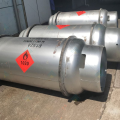
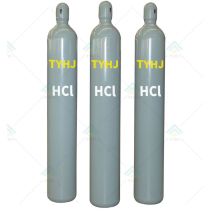
As the demand for faster processors, AI chips, electric vehicles, 5G infrastructure, and advanced consumer electronics continues to grow, semiconductor manufacturers require ultra-high-purity process gases to achieve exceptional precision and product reliability. Among these gases, hydrogen chloride (HCl) specialty gas plays a vital role throughout semiconductor fabrication and other high-performance electronics manufacturing processes.
Unlike industrial-grade hydrochloric acid or standard HCl gas, electronic-grade HCl specialty gas is manufactured with extremely low impurity levels, ensuring it meets the stringent cleanliness standards required in modern cleanrooms and semiconductor fabs.
This article explores how HCl specialty gas contributes to high-performance electronics, its major applications, advantages, purity requirements, and considerations when selecting a reliable supplier.
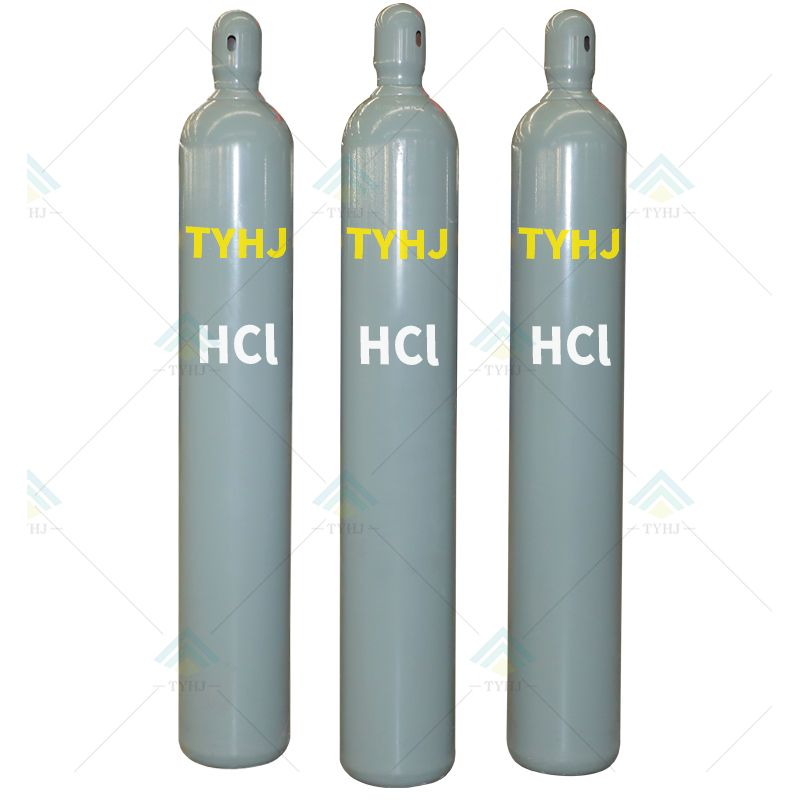
HCl specialty gas is high-purity hydrogen chloride gas specifically produced for industries requiring precise chemical reactions and contamination-free processing.
Electronic-grade HCl typically features:
Ultra-high purity (99.999% to 99.9999%)
Extremely low moisture content
Minimal oxygen and metal impurities
Stable gas composition
Strict quality control and traceability
These characteristics make HCl suitable for advanced semiconductor manufacturing, photovoltaic production, compound semiconductor growth, and precision materials processing.
Modern integrated circuits contain billions of transistors packed into chips measuring only a few square centimeters. At these nanometer-scale geometries, even microscopic contamination can result in:
Yield loss
Defective wafers
Reduced chip performance
Lower device reliability
Higher manufacturing costs
Therefore, every process gas used inside semiconductor fabrication equipment must meet extremely high purity standards.
HCl specialty gas helps maintain contamination-free processing while enabling highly controlled chemical reactions.
One of the most important applications of HCl specialty gas is silicon epitaxial growth.
During epitaxy, a thin single-crystal silicon layer is deposited onto a silicon wafer.
HCl helps by:
Controlling silicon deposition rates
Removing unwanted silicon deposits
Preventing reactor contamination
Improving epitaxial layer uniformity
Producing smoother wafer surfaces
The result is higher-quality semiconductor wafers used in:
CPUs
GPUs
Memory chips
Power semiconductors
Automotive ICs
Surface cleanliness directly affects semiconductor device performance.
HCl specialty gas participates in cleaning processes that remove:
Native oxides
Metallic contaminants
Surface residues
Processing by-products
Clean wafer surfaces improve:
Film adhesion
Pattern accuracy
Device reliability
Electrical characteristics
This is particularly important before deposition, oxidation, or lithography processes.
During repeated deposition cycles, process chambers accumulate unwanted materials.
HCl gas reacts with these deposits and converts them into volatile compounds that are easily removed.
Benefits include:
Reduced particle contamination
Longer equipment lifetime
Improved process consistency
Lower maintenance costs
Higher production uptime
High-performance electronics increasingly rely on compound semiconductors such as:
Gallium Nitride (GaN)
Silicon Carbide (SiC)
Gallium Arsenide (GaAs)
HCl specialty gas supports crystal growth and precursor chemistry during:
MOCVD
CVD
Epitaxial deposition
These materials are widely used in:
5G base stations
Electric vehicles
Radar systems
RF power amplifiers
Aerospace electronics
The electric vehicle industry has accelerated demand for SiC power devices.
HCl is widely used during SiC epitaxial growth because it helps:
Control growth rates
Improve crystal quality
Reduce defects
Increase wafer uniformity
High-quality SiC devices deliver:
Lower switching losses
Higher operating temperatures
Greater energy efficiency
Advanced solar cell production also utilizes HCl specialty gas.
Applications include:
Silicon wafer processing
Surface preparation
High-efficiency solar cell fabrication
Epitaxial silicon production
Improved wafer quality contributes to:
Higher photovoltaic conversion efficiency
Better long-term stability
Lower manufacturing defects
Chemical Vapor Deposition requires carefully controlled reaction environments.
HCl specialty gas assists by:
Regulating deposition chemistry
Preventing unwanted nucleation
Maintaining reactor cleanliness
Improving film uniformity
Applications include:
Dielectric films
Silicon films
Protective coatings
Functional thin films
Electronic-grade HCl minimizes contamination from:
Moisture
Oxygen
Metallic ions
Hydrocarbons
Particulates
This improves semiconductor yield and reliability.
HCl enables highly controlled etching and deposition reactions.
Manufacturers achieve:
Consistent process repeatability
Uniform wafer treatment
Tight process windows
Using high-purity HCl helps produce:
Smooth surfaces
Reduced crystal defects
Better epitaxial layers
Higher electrical performance
Cleaner reactors require fewer maintenance shutdowns.
Benefits include:
Increased equipment utilization
Lower downtime
Higher throughput
Reduced operational costs
High-quality semiconductor manufacturing results in:
Longer chip lifespan
Stable electrical performance
Improved thermal reliability
Lower failure rates
HCl specialty gas supports numerous high-tech industries.
| Industry | Typical Application |
|---|---|
| Semiconductor Manufacturing | Silicon epitaxy, wafer cleaning |
| Integrated Circuit Production | Process gas, chamber cleaning |
| LED Manufacturing | Compound semiconductor growth |
| Photovoltaics | Solar wafer processing |
| Electric Vehicles | SiC power semiconductor production |
| Telecommunications | RF semiconductor fabrication |
| Aerospace | High-reliability electronic components |
| Consumer Electronics | Advanced chip manufacturing |
When purchasing HCl specialty gas, buyers should evaluate several critical specifications.
Typical grades include:
99.999%
99.9995%
99.9999%
Higher purity is recommended for advanced semiconductor nodes.
Moisture is one of the most harmful contaminants.
Electronic-grade HCl typically maintains moisture levels below a few ppm or even ppb, depending on the application.
Trace metals can cause semiconductor defects.
Quality suppliers tightly control elements such as:
Iron (Fe)
Sodium (Na)
Potassium (K)
Calcium (Ca)
Aluminum (Al)
Gas cylinders should feature:
High-purity internal treatment
Electropolished stainless steel valves
Leak-tested packaging
Cleanroom preparation
Hydrogen chloride is corrosive and toxic when improperly handled.
Manufacturers should implement:
Gas detection systems
Proper ventilation
Automatic shutoff valves
Corrosion-resistant piping
Personal protective equipment (PPE)
Regular leak inspections
Following international safety standards helps ensure safe operation while maintaining product quality.
Selecting the right supplier directly impacts production quality and operational reliability.
Consider the following factors:
Consistent ultra-high purity
Semiconductor-grade manufacturing processes
Comprehensive quality documentation
Batch traceability
Stable supply capacity
Reliable cylinder management
Technical application support
Compliance with ISO and international quality standards
A trusted supplier should also provide customized gas packaging, analytical reports, and dependable global logistics for semiconductor manufacturers.
Emerging technologies are driving increased demand for high-purity electronic gases, including HCl.
Growth sectors include:
Artificial Intelligence (AI) chips
High-performance computing (HPC)
Electric vehicles
Wide-bandgap semiconductors
5G and 6G communications
Data centers
Industrial automation
Advanced sensors
Internet of Things (IoT)
As semiconductor processes continue to shrink below advanced technology nodes, the need for contamination-free specialty gases will only become more critical.
HCl specialty gas is an indispensable material in high-performance electronics manufacturing. From silicon epitaxy and wafer cleaning to reactor maintenance and compound semiconductor production, ultra-high-purity HCl enables the precision, consistency, and cleanliness required for today's most advanced electronic devices.
By choosing semiconductor-grade HCl with stringent purity control and partnering with a reliable specialty gas supplier, manufacturers can improve wafer quality, increase production yields, reduce equipment downtime, and support the development of next-generation technologies. As AI, electric vehicles, renewable energy, and advanced communications continue to evolve, HCl specialty gas will remain a key enabler of innovation across the global electronics industry.

Search News