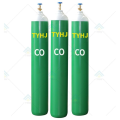
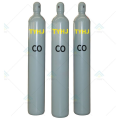
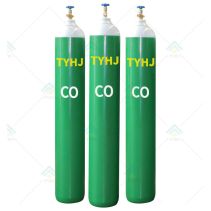
When a gas detector gives an inaccurate reading or an industrial analyzer fails a performance check, the problem may come from sensor drift, improper calibration, or an unreliable reference gas. CO Specialty Gas provides a controlled carbon monoxide concentration for testing instrument accuracy, verifying sensor response, and maintaining measurement consistency. This guide is intended for gas detector manufacturers, calibration laboratories, environmental testing facilities, and industrial equipment suppliers looking for CO calibration gas for gas detector testing, carbon monoxide calibration gas for analyzer verification, and CO reference gas for emissions testing.
CO Specialty Gas refers to carbon monoxide (CO) supplied in a controlled purity or as a precisely prepared gas mixture with a specified concentration. For calibration and testing, it is commonly supplied as a mixture of CO in nitrogen or synthetic air, depending on the instrument and testing procedure.
Carbon monoxide is a colorless, odorless, toxic, and flammable gas. Its chemical formula is CO, and its concentration in calibration mixtures is commonly expressed in parts per million (ppm) or micromoles per mole (µmol/mol).
Unlike ordinary industrial gas, calibration-grade CO gas is selected according to its concentration accuracy, impurity limits, analytical documentation, and measurement traceability. These characteristics allow laboratories and equipment manufacturers to use a known reference value when evaluating instrument performance.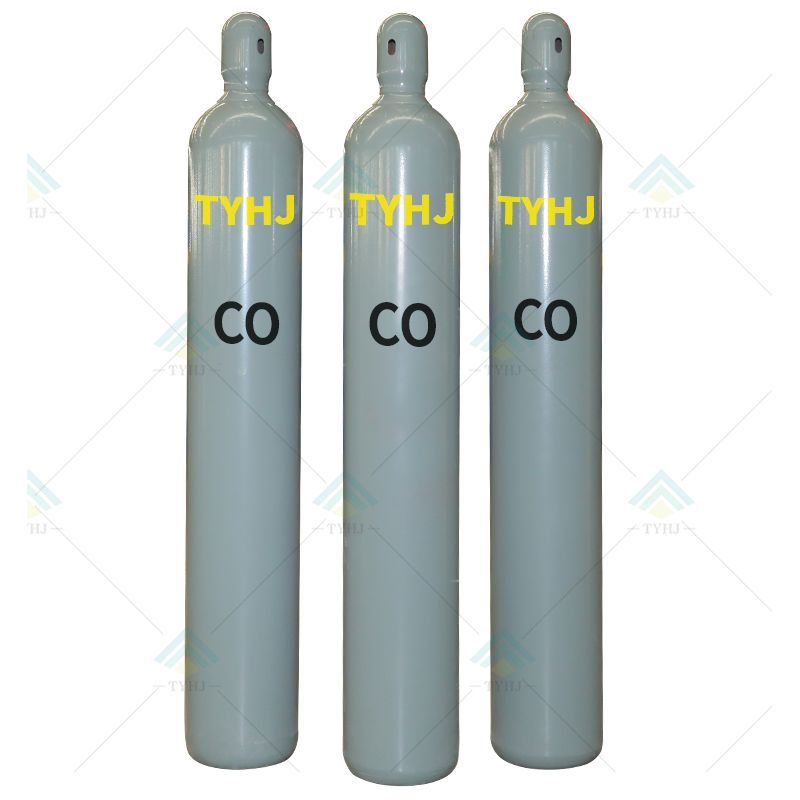
Zero Gas: Gas containing no intentional CO addition, used to establish an instrument's baseline response.
Span Gas: A reference gas with a known CO concentration used to adjust or verify the instrument's measurement range.
Balance Gas: The remaining gas in a calibration mixture, commonly nitrogen or synthetic air.
Certified Concentration: The assigned CO concentration documented for a particular gas mixture.
Measurement Uncertainty: The quantified uncertainty associated with the reported concentration of a reference gas.
Metrological Traceability: A documented relationship between a measurement result and recognized reference standards through an unbroken calibration chain.
Understanding these terms helps buyers specify the correct CO calibration mixtures rather than purchasing a gas based only on its chemical composition.
Gas detectors are widely installed in industrial facilities, laboratories, underground workplaces, and other environments where carbon monoxide exposure must be monitored.
Over time, sensor performance can change because of aging, environmental conditions, contamination, or prolonged operation. CO specialty gas provides a known concentration for checking whether a detector responds correctly.
Typical testing procedures include:
Zero calibration: Establishing the baseline reading using an appropriate zero gas.
Span calibration: Introducing a known CO concentration to verify or adjust the detector response.
Alarm verification: Checking whether the detector activates its configured alarm at the specified test concentration.
Response testing: Evaluating how the sensor responds when exposed to CO gas.
For portable and fixed CO detectors, the selected calibration concentration should match the manufacturer's instructions and the intended measurement range.
Industrial and laboratory gas analyzers measure carbon monoxide concentrations in different gas streams. Their readings are used for process monitoring, equipment evaluation, and environmental measurements.
CO calibration gas helps determine whether an analyzer produces accurate and repeatable results when exposed to known reference concentrations.
Common testing applications include:
Verifying the accuracy of industrial CO analyzers.
Checking analyzer linearity across different concentration points.
Evaluating measurement repeatability and stability.
Identifying baseline drift and measurement deviations.
Checking analyzer performance after maintenance or sensor replacement.
For laboratories that conduct regular instrument verification, using documented CO reference gas mixtures helps maintain consistency between different testing sessions.
Environmental monitoring stations measure carbon monoxide concentrations in ambient air to evaluate air quality and identify potential pollution sources.
CO specialty gas is used as a reference material when calibrating and verifying environmental monitoring instruments. Depending on the monitoring method, laboratories may require low-concentration CO mixtures to evaluate instrument sensitivity and performance near their intended operating range.
Typical applications include:
Ambient air quality monitoring.
Environmental laboratory testing.
Urban air pollution monitoring equipment.
Continuous CO monitoring system verification.
Research into atmospheric carbon monoxide concentrations.
Accurate reference concentrations are particularly important when instruments are used to compare measurements collected at different monitoring locations or over extended periods.
Carbon monoxide is one of the gases measured during vehicle exhaust analysis and engine combustion testing. Its concentration can provide useful information about combustion conditions and exhaust emissions.
Automotive laboratories and equipment manufacturers use CO reference gas to verify exhaust gas analyzers and emission testing equipment.
Typical applications include:
Calibration of automotive exhaust gas analyzers.
Verification of vehicle emission testing equipment.
Testing instruments used in engine development laboratories.
Checking CO measurement accuracy during combustion analysis.
Quality control of portable exhaust monitoring devices.
Using a reference gas with a suitable concentration allows technicians to compare the analyzer's indicated value against the assigned reference value before conducting actual exhaust measurements.
Manufacturers of electrochemical, infrared, and other CO sensing technologies need reliable reference gases during product development and production testing.
CO calibration mixtures can be used to evaluate sensor performance under controlled conditions, including:
Sensor sensitivity at different CO concentrations.
Response and recovery characteristics.
Measurement repeatability between production batches.
Signal stability during continuous operation.
Potential cross-sensitivity to other gases.
For manufacturers producing large quantities of gas detection equipment, standardized testing procedures help identify performance variations before products reach the market.
Choosing a suitable CO calibration gas requires more than specifying the gas name. The concentration, balance gas, certification, cylinder specifications, and intended testing method must all be considered.
First, determine which equipment will use the calibration gas. A portable CO detector, an industrial gas analyzer, and an automotive exhaust analyzer may have different measurement ranges and calibration requirements.
Record the following information:
Instrument type and manufacturer.
Measurement range and resolution.
Required calibration points.
Applicable testing procedure.
Required accuracy and acceptance tolerance.
This information establishes the technical requirements for the reference gas.
The calibration concentration should be selected according to the instrument's operating range and the manufacturer's recommended procedure.
For example, a hypothetical CO analyzer with a measurement range of 0–100 ppm may use reference concentrations such as 25 ppm, 50 ppm, and 75 ppm for a multi-point performance evaluation. These are illustrative test points, not universal calibration requirements.
For some applications, a single span concentration is sufficient. Others require several reference concentrations to evaluate linearity and measurement performance across the operating range.
CO calibration mixtures are commonly prepared with nitrogen or synthetic air as the balance gas.
CO in nitrogen: Suitable for instruments and procedures designed for nitrogen-based calibration mixtures.
CO in synthetic air: Appropriate for applications where the calibration method requires an air-based matrix, including certain oxygen-dependent sensor systems.
The balance gas can affect sensor response, particularly when the instrument uses an electrochemical sensing principle. Therefore, buyers should confirm matrix compatibility before ordering.
For accurate instrument testing, the CO concentration must be supported by appropriate analytical documentation.
Before purchasing, check:
Certified or assigned CO concentration.
Concentration tolerance and measurement uncertainty.
Analytical certificate and batch identification.
Preparation and analysis methods.
Traceability requirements for the intended application.
Recommended shelf life and storage conditions.
For regulated emissions monitoring or laboratory reference applications, buyers should confirm whether the gas must meet a specific certification protocol or recognized reference material requirement.
The cylinder should be compatible with the gas mixture, storage requirements, and intended consumption rate.
Consider the following factors:
Cylinder material and internal surface compatibility.
Gas cylinder capacity and filling pressure.
Valve connection and regulator compatibility.
Required gas quantity and expected testing frequency.
Transportation and destination-country requirements.
Portable cylinders may be suitable for field testing and low-volume applications, while larger cylinders can support laboratories and facilities with regular calibration requirements.
Once the correct reference gas has been selected, a consistent calibration procedure helps reduce measurement errors and improve testing repeatability.
Prepare the CO analyzer or detector, compatible regulator, gas delivery tubing, calibration adapter, and appropriate zero gas. Confirm that the testing environment meets the instrument manufacturer's requirements.
Check the cylinder label, certificate, expiry information, regulator connections, and gas delivery system before use.
Introduce the specified zero gas into the instrument according to the approved procedure. Allow the reading to stabilize and record the baseline value.
If the baseline reading falls outside the permitted range, investigate possible contamination, residual gas, sensor drift, or equipment problems before proceeding.
Connect the CO calibration gas cylinder through a compatible regulator and introduce the gas at the flow rate and pressure specified by the instrument manufacturer.
Allow sufficient time for the sensor or analyzer to stabilize. Record the displayed CO concentration and compare it with the certified reference value.
For instruments requiring a broader performance evaluation, introduce several CO concentrations within the approved measurement range.
For example, an illustrative three-point test may use 25 ppm, 50 ppm, and 75 ppm for a 0–100 ppm analyzer. Compare the indicated readings with the corresponding reference concentrations to assess the calibration curve and linearity.
The exact concentrations and number of calibration points must follow the applicable instrument procedure rather than a general-purpose schedule.
Record the reference concentration, instrument reading, calibration date, cylinder identification, and relevant testing conditions.
A simple measurement deviation can be calculated as:
Measurement Deviation = Instrument Reading − Reference Concentration
For example, if a reference gas contains 50 ppm CO and the analyzer displays 48 ppm, the measurement deviation is -2 ppm, equivalent to -4% of the reference concentration.
Compare the result against the instrument's specified acceptance tolerance. If the deviation exceeds the permitted limit, follow the manufacturer's adjustment and troubleshooting procedure and repeat the verification.
Calibration accuracy depends on both the reference gas and the instrument being tested. Even when a gas mixture has a clearly stated concentration, its measurement uncertainty must be considered when evaluating the overall calibration result.
For laboratories conducting precision measurements, the uncertainty budget may include reference gas uncertainty, instrument resolution, flow stability, environmental conditions, and repeatability.
The balance gas, moisture content, and other components can influence the response of certain sensors and analyzers. A calibration mixture that works for one instrument may not be suitable for another.
For this reason, the calibration gas composition should be consistent with the validated measurement method whenever possible.
Some CO sensors may respond to interfering gases, depending on their sensing technology. Cross-sensitivity testing helps manufacturers understand whether other gas components can influence the reported CO concentration.
When necessary, separate interference testing should be conducted using suitable reference mixtures and controlled test conditions.
When a laboratory needs several CO concentrations from a higher-concentration reference mixture, a dynamic dilution system can be used with calibrated mass flow controllers.
The system combines a reference gas with a compatible diluent at controlled flow rates to produce different target concentrations. This approach can reduce the need to maintain a separate cylinder for every test point.
However, the flow controller calibration, mixing performance, dilution ratio, and combined measurement uncertainty must be evaluated. Dynamic dilution is not automatically more accurate than using individually certified gas mixtures.
Carbon monoxide requires strict handling controls because it is highly toxic, odorless, and flammable. Even a small leak can create a serious exposure hazard.
When working with CO calibration gas, follow these precautions:
Store cylinders in designated, well-ventilated areas with appropriate gas detection and safety controls.
Secure cylinders in an upright position and protect valves from damage.
Use compatible regulators, connections, and gas delivery equipment.
Conduct leak checks using approved methods before introducing the gas.
Ensure that calibration exhaust is discharged to a suitable safe location.
Allow only trained personnel to handle and operate CO gas systems.
Follow the supplier's Safety Data Sheet (SDS) and applicable local regulations.
Never rely on smell to identify a carbon monoxide leak. Appropriate ventilation, monitoring, and emergency procedures are essential for all calibration and testing operations.
CO specialty gas is primarily used for calibrating carbon monoxide detectors, gas analyzers, environmental monitoring instruments, automotive exhaust testing equipment, and industrial sensors. It provides a known reference concentration for checking measurement accuracy and sensor performance.
CO calibration gas can be prepared at different concentrations according to the instrument range and application. Low-ppm mixtures are commonly relevant to detector and analyzer calibration, while higher concentrations may be required for specialized testing. The required concentration should be confirmed against the instrument manufacturer's specifications.
Neither is universally better. CO in nitrogen is suitable for instruments designed for nitrogen-based calibration, while CO in synthetic air may be necessary for systems that require an air-based gas matrix. Always follow the instrument's validated calibration procedure.
A bump test checks whether a gas detector responds to CO gas and whether its alarm functions correctly. Calibration compares the instrument's reading with a known reference concentration and may involve adjusting the instrument. A successful bump test does not necessarily confirm measurement accuracy.
Calibration frequency depends on the detector manufacturer's recommendations, operating environment, usage conditions, and applicable safety requirements. Some facilities also conduct periodic functional checks between full calibration procedures. There is no single interval suitable for every CO detector.
Buyers should provide the required CO concentration, balance gas, cylinder size, filling pressure, valve connection, quantity, analytical certification requirements, and destination country. Providing the instrument model and application can also help the supplier recommend a suitable gas specification.
For industrial users, laboratory operators, and gas detection equipment manufacturers, selecting a suitable supplier is an important part of maintaining consistent calibration results.
When evaluating a CO specialty gas manufacturer or supplier, consider the following:
Gas preparation capability: The supplier should be able to provide the required CO purity or specified gas mixture concentration.
Quality control: Appropriate analytical equipment and batch-level quality checks are important for maintaining gas composition consistency.
Documentation: Certificates and relevant technical specifications should be available to support the intended calibration application.
Customized specifications: Different instruments and laboratories may require different concentrations, balance gases, and cylinder configurations.
Packaging and logistics: Cylinder selection, valve compatibility, hazardous goods transportation, and export documentation should be considered before ordering.
For specialized laboratories and equipment manufacturers, working with a supplier that understands calibration gas preparation can simplify product selection and reduce specification mismatches.
CO Specialty Gas plays an important role in gas detector calibration, analyzer verification, environmental monitoring, automotive emission testing, and sensor manufacturing. Selecting the correct concentration, balance gas, analytical documentation, and cylinder configuration helps laboratories and industrial users maintain reliable measurement results.
Whether you need CO specialty gas for laboratory calibration, custom CO calibration gas mixtures for detector manufacturing, or carbon monoxide standard gas for industrial testing, the specifications should always match your equipment and application requirements.
Chengdu Taiyu Industrial Gases Co., Ltd provides specialty gas products and gas mixture solutions for industrial and laboratory applications. If you are sourcing CO gas for calibration and testing, contact Chengdu Taiyu Industrial Gases Co., Ltd with your target concentration, balance gas, cylinder specifications, and required quantity to discuss a suitable product configuration.

Search News