Why can two suppliers quote different prices for what appears to be the same carbon monoxide gas? For industrial buyers, laboratory managers, and gas detection equipment manufacturers, the difference often comes down to purity, cylinder specifications, quality certification, and delivery requirements. Understanding the key factors affecting CO Specialty Gas pricing helps procurement teams compare quotations accurately, control purchasing costs, and avoid paying for specifications they do not need. Whether you are sourcing high-purity carbon monoxide gas, CO calibration gas mixtures, or industrial CO gas cylinders in bulk, this guide explains what determines the final price and how to make a cost-effective purchasing decision.
CO Specialty Gas refers to carbon monoxide (CO) supplied in specified purity grades or prepared as a controlled gas mixture for industrial, laboratory, and analytical applications.
Carbon monoxide is a colorless, odorless gas with the chemical formula CO and CAS number 630-08-0. It is used in chemical synthesis, metallurgy, electronics, gas analysis, and calibration applications. Because CO is both toxic and flammable, its production, filling, storage, and transportation require appropriate technical and safety controls.
Depending on the application, buyers may purchase:
Industrial-grade CO: Used in chemical processes, metallurgy, and other industrial applications where specified purity and impurity limits must be met.
High-purity CO: Used in applications requiring tighter control of trace impurities.
CO calibration gas: A mixture containing a specified CO concentration in a balance gas, such as nitrogen, for instrument calibration and testing.
Customized CO gas mixtures: Prepared according to customer requirements for concentration, composition, and analytical specifications.
These products do not have identical production requirements. A standard industrial CO cylinder and a certified low-concentration CO reference mixture may require different raw materials, preparation procedures, analytical testing, and documentation. Therefore, their prices should not be compared on a cylinder-to-cylinder basis alone.
There is no universal market price for CO specialty gas. Suppliers generally calculate quotations according to the product specification and the total cost of supplying it.
A practical purchasing cost model is:
Total Landed Cost = Gas Filling Cost + Cylinder and Packaging Cost + Quality Control Cost + Transportation Cost + Applicable Taxes and Import Charges
Additional charges may apply for cylinder rental, refundable deposits, customized valves, special packaging, and documentation.
The European Commission's 2018 Praxair/Linde merger decision (Case M.8480) noted that specialty gas cylinder prices are generally established through negotiation and that transportation can represent a significant part of the final supply cost. This helps explain why two suppliers offering similar gas specifications may still provide different delivered quotations.
Purity is one of the first factors buyers should consider when evaluating carbon monoxide gas prices.
Higher-purity CO generally requires more demanding purification, contamination control, and analytical verification. The supplier must also control individual impurities to ensure that the gas meets the customer's technical requirements.
For example, Chengdu Taiyu Industrial Gases Co., Ltd lists the following CO product specifications:
| Specification | 99.9% CO | 99.99% CO |
|---|---|---|
| Hydrogen | ≤5 ppm | ≤1 ppm |
| Oxygen | ≤50 ppm | Oxygen + Argon ≤50 ppm |
| Nitrogen | ≤450 ppm | ≤40 ppm |
| Carbon Dioxide | ≤30 ppm | ≤5 ppm |
| Methane | ≤20 ppm | ≤1 ppm |
| Moisture | ≤5 ppm | ≤1 ppm |
| Total Impurity | ≤1,000 ppm | Not separately stated |
The difference between 99.9% and 99.99% CO is 0.09 percentage points in nominal purity. When purity is expressed as the balance after total impurities, these grades correspond to nominal non-CO fractions of 1,000 ppm and 100 ppm, respectively.
This illustrates why a higher-purity specification can require additional manufacturing and quality-control work. However, buyers should evaluate the actual impurity limits rather than relying only on the headline purity percentage.
Purchasing tip: Do not automatically select the highest available purity. Identify the maximum acceptable levels of oxygen, moisture, nitrogen, hydrogen, and other relevant impurities for your process. Paying for a purity level beyond the application requirement may increase procurement costs without providing a practical benefit.
Another important factor affecting CO specialty gas prices is whether the buyer needs pure carbon monoxide or a prepared gas mixture.
For example, a calibration laboratory may require 50 ppm CO in nitrogen, while another customer may need 500 ppm CO or a higher-concentration reference mixture.
These products involve different preparation requirements.
Pure CO: Pricing is mainly influenced by purity, cylinder specifications, filling requirements, and quality control.
Single-component calibration mixture: Requires controlled blending, concentration verification, and suitable balance gas selection.
Multi-component calibration mixture: May require several certified feed gases, more complex blending calculations, and additional analytical verification.
Low-concentration CO mixture: May require more precise preparation and additional attention to cylinder stability and measurement uncertainty.
For certified calibration mixtures, preparation methods can also affect the quotation. ISO 6142-1:2015 specifies a gravimetric preparation method for Class I calibration gas mixtures, including the evaluation of uncertainty arising from weighing, component purity, mixture stability, and final verification.
Consequently, two CO calibration gas cylinders with the same nominal concentration may have different prices if their uncertainty requirements, certification levels, or analytical procedures differ.
Specialty gas quality is not determined by the filling process alone. Analytical verification is another important part of the final product cost.
For industrial users and laboratories, a reliable CO gas supplier should be able to provide appropriate documentation, including:
Certificate of Analysis (CoA): Records the measured or assigned gas composition and relevant quality specifications.
Purity Analysis: Identifies the CO concentration and controlled impurity levels.
Batch Identification: Allows buyers to trace the supplied product to its production and testing records.
Measurement Uncertainty: Describes the uncertainty associated with a certified or assigned concentration.
Safety Data Sheet (SDS): Provides information about gas hazards, handling, storage, and emergency measures.
In its 2024 publication on value assignment and uncertainty evaluation for certified reference gas mixtures, the U.S. National Institute of Standards and Technology (NIST) discussed the importance of calibration data, historical reference mixtures, cylinder-specific measurements, and uncertainty evaluation.
This demonstrates why certified reference gas production involves more than simply filling a cylinder with the requested gas concentration.
When comparing quotations, buyers should establish whether analytical testing and certification are included in the quoted price or charged separately.
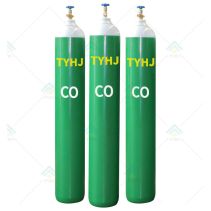
The cylinder is another factor that directly affects the purchasing cost of CO specialty gas.
Different cylinder capacities and filling pressures determine how much gas a customer receives in each package. Cylinder material, valve specifications, inspection requirements, and packaging arrangements can also influence the total cost.
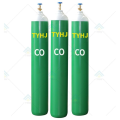
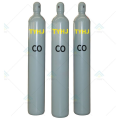
For example, the published CO product specifications from Chengdu Taiyu Industrial Gases Co., Ltd include the following packaging options:
| Cylinder Capacity | Valve | Gas Volume | Filling Pressure |
|---|---|---|---|
| 47 L | CGA350 | 7 m³ | 150 bar / 2,175 psig |
| 50 L | CGA350 | 10 m³ | 200 bar / 2,900 psig |
These specifications illustrate why cylinder capacity alone does not determine the amount of gas supplied. Filling pressure also matters.
For buyers, it is useful to compare the cost per cubic meter rather than simply comparing the price per cylinder.
Cost per nominal cubic meter = Cylinder Gas Price ÷ Nominal Gas Volume
For a complete purchasing comparison, freight, cylinder rental, deposits, and other charges should also be included. Actual usable gas volume may be lower than the nominal quantity because of residual pressure and operating conditions.
Purchasing tip: Confirm the cylinder size, filling pressure, valve connection, and gas volume before accepting a quotation. A cylinder with a lower purchase price may not offer the better unit cost.
Cylinder material and internal surface conditions can influence the stability of certain gas mixtures, particularly when low-concentration components are involved.
For CO calibration mixtures, interactions between the gas and cylinder surfaces may affect the delivered concentration over time. Depending on the mixture composition and concentration, suppliers may need to consider cylinder material selection, internal treatment, surface conditioning, and stability testing.
These additional requirements can increase preparation costs, but they are important when the customer needs consistent calibration results throughout the product's storage life.
Buyers should therefore ask whether the quoted CO gas is supplied in a standard cylinder or a specially prepared cylinder, and whether the stated shelf life is supported by stability data.
Order quantity can have a meaningful impact on the unit price of CO specialty gas.
Small orders often involve relatively high fixed costs per cylinder because preparation, cylinder handling, analytical testing, documentation, and delivery must still be arranged.
For larger orders, suppliers may be able to distribute certain fixed costs across more cylinders and optimize production and transportation arrangements.
However, bulk purchasing does not automatically guarantee a lower price. The result depends on the product specification, production capacity, order frequency, and delivery arrangement.
Buyers should consider the following purchasing approaches:
Trial orders: Useful for evaluating gas quality, packaging, and supplier reliability before committing to larger quantities.
Regular orders: Help suppliers plan production and inventory requirements.
Bulk orders: May reduce per-cylinder handling and transportation costs.
Annual supply agreements: Can provide more predictable procurement conditions when consumption is relatively stable.
For example, a laboratory purchasing two CO cylinders every month may benefit from consolidating its annual requirements into a planned supply arrangement rather than repeatedly placing urgent individual orders.
Transportation is often overlooked when buyers compare CO gas quotations, especially when purchasing from overseas manufacturers.
Carbon monoxide is classified as a toxic and flammable gas. Its transportation requires appropriate cylinder packaging, hazard labeling, documentation, and carrier arrangements.
Depending on the destination and shipping method, transportation costs may include:
Hazardous goods transportation charges.
Specialized cylinder packaging and handling.
Export documentation and customs clearance.
Port handling and destination delivery.
Import duties and applicable taxes.
Regional distribution and local delivery charges.
The European Commission's 2018 Praxair/Linde decision identified transportation as an important cost component in specialty gas cylinder supply. It also explained how local distribution networks and delivery consolidation influence supplier competitiveness.
This is particularly relevant for international buyers. A manufacturer offering a lower ex-works price may not necessarily provide the lowest final delivered cost.
When requesting an overseas CO gas quotation, specify the destination country, delivery address or port, required shipping method, and expected order quantity.
The supplier's production capabilities also influence CO specialty gas pricing.
A manufacturer with established purification, cylinder filling, analytical testing, and quality management processes may have different operating costs from a trading company that relies entirely on external production and testing services.
Important supplier evaluation criteria include:
Experience in producing and supplying CO specialty gas.
Availability of different purity grades.
Raw material sourcing and production stability.
In-house or qualified third-party analytical testing.
Batch traceability and quality documentation.
Customized cylinder and valve options.
Export experience and hazardous goods logistics capabilities.
A slightly lower quotation is not necessarily the most economical choice if the supplier cannot maintain consistent quality or meet the agreed delivery schedule.
For procurement managers sourcing carbon monoxide gas in bulk, comparing quotations requires a consistent evaluation method. The following steps can help prevent specification mismatches and unexpected charges.
Start by identifying the exact product required.
Prepare the following information:
Required CO purity or concentration.
Maximum allowable impurity levels.
Pure gas or calibration gas mixture.
Balance gas, if applicable.
Required gas volume per cylinder.
Number of cylinders per order.
Intended application and technical requirements.
Providing these details helps suppliers prepare comparable quotations instead of offering different product specifications under the same product name.
Make sure all suppliers quote the same cylinder capacity, filling pressure, valve connection, and gas volume.
For example, comparing a 47 L cylinder containing 7 m³ of CO with a 50 L cylinder containing 10 m³ of CO without adjusting for the actual gas quantity can lead to misleading price comparisons.
Also clarify whether the cylinder is purchased, rented, or provided under a deposit arrangement.
Request the technical specification sheet and relevant analytical documents from each supplier.
Check whether the CO purity, impurity limits, batch analysis, and certificate requirements match your original specification.
For calibration gas, also compare the assigned concentration, measurement uncertainty, preparation method, and stated stability period.
Do not compare only the gas filling price. Calculate the full purchasing cost, including transportation and additional charges.
For example, assume two suppliers offer the same CO purity and cylinder capacity, but their delivery and packaging charges differ.
Supplier A may offer a lower gas price but charge separately for hazardous goods transportation and cylinder rental. Supplier B may include more of these services in the initial quotation.
In this situation, the correct comparison is the total amount payable for the same quantity of usable gas, with refundable deposits listed separately.
Confirm the production lead time, shipping schedule, expected delivery date, and ability to supply repeat orders.
For industrial production lines and laboratories with continuous gas requirements, a reliable supply schedule can be more valuable than a small reduction in the initial cylinder price.
It is also worth discussing annual purchasing forecasts and consolidated shipments when your consumption is predictable.
One of the simplest ways to manage CO gas procurement costs is to match the purity grade to the actual application.
For example, if a process accepts 99.9% CO and does not require the tighter impurity limits of 99.99% CO, purchasing the higher grade may create unnecessary expenditure.
However, never reduce purity or relax impurity specifications without confirming technical acceptance with the process engineer or equipment manufacturer.
Review actual consumption before selecting cylinder sizes.
Larger cylinders may reduce the number of individual deliveries and handling operations, but they also require suitable storage capacity and gas consumption planning.
Smaller cylinders may be more practical for low-volume testing or facilities with limited storage space.
The objective is to balance gas utilization, delivery frequency, cylinder costs, and storage requirements.
Repeated small orders can increase administrative and transportation expenses.
If your facility uses CO regularly, combining compatible orders into scheduled shipments may improve purchasing efficiency.
Before consolidating orders, confirm the shelf life, storage conditions, and expected consumption of each cylinder to avoid holding unused gas for too long.
Request quotations using one standardized specification sheet.
Include purity, impurity limits, cylinder capacity, filling pressure, valve, quantity, certification, and destination. This allows your procurement team to identify genuine price differences rather than differences caused by product specifications.
Total Cost of Ownership (TCO) includes more than the initial gas purchase.
For CO specialty gas, TCO may include:
Gas filling and packaging costs.
Cylinder rental or ownership expenses.
Transportation and hazardous goods charges.
Storage and handling expenses.
Gas remaining in cylinders at the end of use.
Quality-related costs caused by unsuitable specifications or inconsistent supply.
A supplier with consistent product quality and predictable delivery may offer better long-term purchasing value even when its initial quotation is not the lowest.
There is no single fixed price for CO specialty gas. The quotation depends on purity, cylinder size, filling pressure, quantity, analytical requirements, packaging, and delivery destination. Buyers should provide a complete technical specification to obtain an accurate quotation.
Generally, higher-purity CO requires more demanding purification and impurity control, which can increase production costs. However, the final price also depends on cylinder specifications, order quantity, and testing requirements. Buyers should compare actual impurity limits rather than purity percentages alone.
Industrial CO is generally priced according to purity, filling, packaging, and supply requirements. CO calibration gas involves additional considerations such as target concentration, balance gas, blending accuracy, analytical verification, and measurement uncertainty. Consequently, calibration mixtures may require different preparation and certification costs.
Bulk purchasing may reduce per-cylinder handling, administrative, and transportation costs. It can also help suppliers plan production more efficiently. However, the actual discount depends on order volume, product specifications, delivery location, and contract conditions.
Differences may come from cylinder capacity, filling pressure, impurity limits, analytical testing, cylinder treatment, packaging, transportation, and service arrangements. Even when two products are both labeled 99.9% CO, their detailed technical specifications may not be identical.
Provide the required purity or concentration, impurity limits, cylinder size, filling pressure, valve connection, order quantity, intended application, certification requirements, and delivery destination. If you need a calibration mixture, also specify the balance gas and required concentration tolerance.
Not always. Some suppliers include cylinder costs in their quotations, while others charge rental fees or refundable deposits separately. Buyers should confirm the cylinder ownership arrangement, rental period, return conditions, and any associated handling charges.
Compare suppliers based on technical specifications, quality documentation, cylinder options, production capabilities, delivery arrangements, and long-term supply reliability. The most cost-effective supplier is the one that meets your technical requirements at a competitive total landed cost, rather than simply offering the lowest initial price.
The price of CO Specialty Gas is determined by several interconnected factors, including purity grade, impurity limits, gas concentration, analytical certification, cylinder specifications, order quantity, and transportation requirements.
For industrial buyers, the most effective purchasing strategy is to define the technical requirements first, compare suppliers using identical specifications, and evaluate the total landed cost rather than focusing exclusively on the price per cylinder.
Whether you are sourcing 99.9% industrial carbon monoxide, 99.99% high-purity CO, or customized CO calibration gas mixtures, a clear specification helps suppliers provide more accurate quotations and reduces unnecessary purchasing expenses.
Chengdu Taiyu Industrial Gases Co., Ltd supplies carbon monoxide specialty gas with different purity grades and cylinder configurations. Its published product specifications include 99.9% and 99.99% CO, with 47 L and 50 L cylinder options. Other purity grades and packaging configurations can be discussed according to customer requirements.
If you are looking for a reliable CO specialty gas manufacturer and supplier, contact Chengdu Taiyu Industrial Gases Co., Ltd with your required purity, cylinder specifications, and estimated purchasing quantity. The team can discuss suitable product configurations and prepare a quotation based on your application and delivery requirements.
ISO 6142-1:2015. Gas Analysis – Preparation of Calibration Gas Mixtures – Part 1: Gravimetric Method for Class I Mixtures. International Organization for Standardization. Provides technical guidance on gas mixture preparation, traceability, stability, and uncertainty evaluation.
ISO 6142-2:2024. Gas Analysis – Preparation of Calibration Gas Mixtures – Part 2: Gravimetric Method for Class II Mixtures. International Organization for Standardization. Addresses batch preparation and uncertainty evaluation for calibration gas mixtures.
Cecelski, C., Carney, J., and Possolo, A. (2024). Value Assignment and Uncertainty Evaluation for Certified Reference Gas Mixtures. National Institute of Standards and Technology (NIST), published in Accreditation and Quality Assurance. Discusses value assignment, measurement uncertainty, and cylinder-specific analytical results.
European Commission (2018). Case M.8480 – Praxair/Linde, Commission Decision of 20 August 2018. Provides industry-level information about specialty gas supply chains, negotiated cylinder pricing, and the influence of transportation and distribution costs.
Chengdu Taiyu Industrial Gases Co., Ltd. Carbon Monoxide, CO Specialty Gas – Published product specifications covering CO purity grades, impurity limits, cylinder capacities, valve configurations, and filling pressures.

Search News